PRESS RELEASE • 18 april 2026
SpaceX Is Going Public: Everything Private Equity Investors Need to Know Right Now
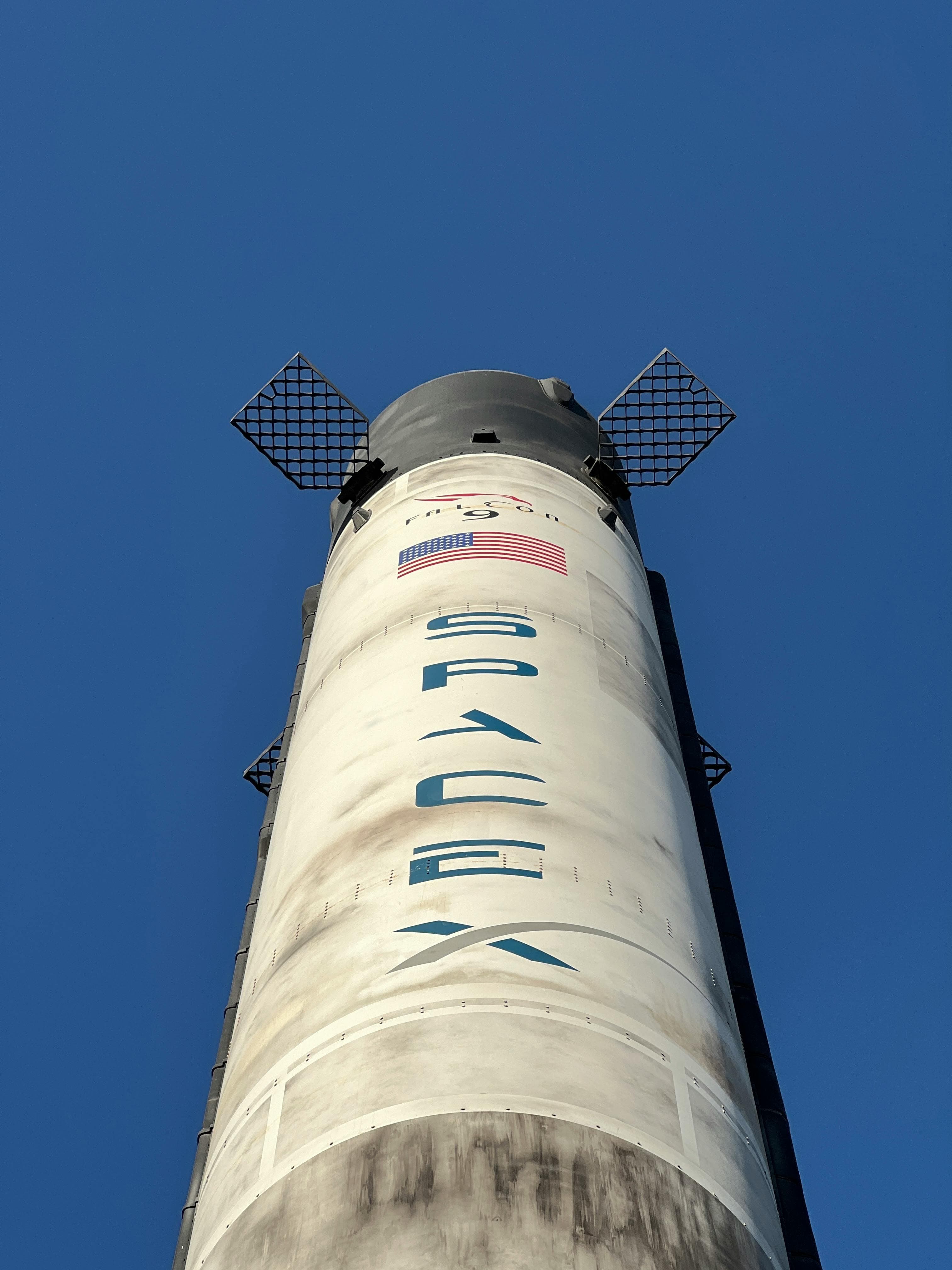
Meta description: SpaceX filed confidentially with the SEC in April 2026, targeting a $1.75–$2 trillion IPO expected in June. Here is what this means for private equity investors watching the largest late-stage private-market story in years.
It is no longer a question of if SpaceX will go public. It is a question of weeks. In one of the most significant developments in private equity and capital markets history, SpaceX filed confidentially with the United States Securities and Exchange Commission in April 2026 — setting in motion what is expected to be the largest initial public offering in the history of the stock market.
For private equity investors who already hold SpaceX exposure through secondary or other private-market channels, this is the liquidity event many have been building toward. For everyone else, SpaceX pre-IPO secondary interest has historically been institutional, tightly allocated, and episodic — it should not be assumed as generally available.
Here is everything you need to know — the latest April 2026 news, the IPO timeline, the valuation, what Starlink means for investors, and what happens next.
Breaking: The April 2026 SpaceX IPO News
April 2026 has been the most consequential month in SpaceX's history from a capital markets perspective. On April 1, SpaceX submitted a confidential filing to the SEC — the standard first step in the IPO process that allows a company to submit its S-1 registration statement for SEC review before making it public. This filing triggered the formal IPO clock.
The implications are significant and the timeline is now concrete:
SEC Confidential Filing: April 1, 2026
Expected Prospectus Publication: May 15–22, 2026
IPO Roadshow Launch: Week of June 8, 2026
Expected IPO Pricing Date: June 18–30, 2026
Target IPO Valuation: $1.75 trillion to $2 trillion
Target Capital Raise: $75 billion
If the timeline holds — and all indications are that it will — SpaceX will price its IPO in late June 2026, making it the largest public offering in stock market history by an enormous margin. For context, the previous record holder, Saudi Aramco, raised $25.6 billion at its 2019 IPO. SpaceX is targeting nearly three times that amount in a single raise.
What this means for pre-IPO holders: The confidential filing marks the beginning of the end of SpaceX as a private company. Investors holding positions established at previous private market valuations are now weeks away from the liquidity event they have been building toward.
The Valuation: How SpaceX Gets to $2 Trillion
A $2 trillion valuation is a number that requires explanation. It would place SpaceX ahead of every publicly traded company in the world except Apple, Microsoft, and Nvidia. Understanding how this valuation is justified requires understanding what SpaceX actually is — and what Starlink specifically represents.
Starlink: The Engine Behind the Valuation
SpaceX is best known for its Falcon 9 rockets and Starship launch vehicle. But the $1.75 to $2 trillion valuation is anchored almost entirely by Starlink — the satellite internet service that SpaceX has been scaling since 2019 and that has grown into one of the fastest-scaling technology businesses in history.
Starlink ended 2025 with 9.2 million paying subscribers across more than 70 countries. Revenue from Starlink exceeded $10 billion in 2025 — a number that analysts project could reach $24 billion by the end of 2026, driven by subscriber growth, enterprise and government contracts, and new distribution partnerships.
The US Mobile partnership announced in April 2026 is a direct example of how Starlink is expanding its addressable market. By bundling Starlink satellite internet with mobile data plans through telecom partners, SpaceX is creating distribution channels that could add millions of subscribers who would not have engaged with Starlink as a standalone direct-to-consumer product.
The Launch Business
SpaceX's dominant position in the global launch market adds significant revenue on top of Starlink. The company captures the majority of commercial and government launch contracts globally, with Falcon 9 achieving a reliability record that competitors have been unable to match. Starship, the next-generation fully reusable launch vehicle, represents a significant additional revenue layer as it reaches full commercialization.
AI and Compute Infrastructure
April 2026 reporting has surfaced a significant internal development: SpaceX is investing heavily in artificial intelligence infrastructure, with Starlink's revenue funding an AI and compute buildout at a scale that rivals dedicated AI companies. This investment is expected to power both Starlink's operational improvements and new product categories — adding a technology growth multiple to what is already a formidable infrastructure business.
What the IPO Means for Private Equity Investors
For investors who already hold SpaceX equity through secondary or other private-market channels — typically shares sourced from employees and early investors through pooled vehicles — the IPO represents the primary liquidity event they have been building toward.
The mechanics are straightforward: at IPO, SpaceX shares will be priced by the public market for the first time. Interests that hold SpaceX equity will typically convert to liquid public shares or distribute cash proceeds based on the IPO price. Investors who established positions at previous private market valuations — whether at the $350 billion valuation from 2024 tender offers or at earlier entry points — will see their returns crystallize at the IPO price.
At a $1.75 trillion IPO valuation, an investor who purchased SpaceX secondary shares at the $350 billion 2024 valuation would see a 5x return on their investment in approximately 24 months. At a $2 trillion valuation, that return approaches 6x. These are the kinds of outcomes that define private equity as an asset class.
The Closing Window for Pre-IPO Positioning
The SpaceX IPO confidential filing changes the calculus for anyone still hoping to establish a pre-IPO position. Once SpaceX prices its IPO in late June 2026, the pre-IPO opportunity is permanently closed for new private entries. Investors who participate at the IPO price start from the public market — they will not capture any of the gain between the last private valuation and the public offering price.
Secondary interest in SpaceX shares has historically compressed as IPO dates approach, and the discount secondary shares have traded at relative to expected IPO valuation often narrows. That market has always been tight and institutional; availability should not be assumed.
This article covers SpaceX as a capital-markets story. It is not a placement offer, and it does not imply that SpaceX inventory is available through prvtmarket.com.
Risks Investors Must Understand
Valuation Risk at These Levels
A $1.75 to $2 trillion IPO valuation prices in an extremely optimistic future for both Starlink and SpaceX's launch operations. If Starlink subscriber growth slows, if competition from Amazon's Project Kuiper or other satellite internet providers intensifies, or if the AI investment program does not generate clear returns, the IPO valuation could come in below current projections — or the stock could underperform in the months following its debut.
Market Conditions
IPO windows can close quickly. If equity market conditions deteriorate significantly between now and June 2026, SpaceX could delay its offering — extending the illiquidity period for pre-IPO investors. While the confidential SEC filing signals strong intent, no IPO is confirmed until shares are actually priced and traded.
Post-IPO Lockup
Pre-IPO investors are typically subject to lockup agreements that prevent selling shares for 90 to 180 days following an IPO. Investors with existing private positions should review and understand the lockup terms of their specific vehicle before assuming a liquidity timeline.
Frequently Asked Questions
Is it confirmed that SpaceX is going public in 2026?
SpaceX filed confidentially with the SEC in April 2026, which is the formal first step in the IPO process. The prospectus is expected in May, with the roadshow and IPO pricing targeted for June. While no IPO is confirmed until shares are priced, the SEC filing represents the strongest public signal yet of SpaceX's intent to go public this year.
What is the expected SpaceX IPO valuation?
SpaceX is targeting a valuation of $1.75 trillion to $2 trillion, which would make it the largest IPO in stock market history. The valuation is anchored primarily by Starlink, which generated over $10 billion in revenue in 2025 and is projected to reach $24 billion by end of 2026.
Is SpaceX pre-IPO equity generally available to retail or marketplace investors?
No. SpaceX secondary allocations have historically been institutional, tightly controlled, and episodic. As the IPO date approaches, any remaining private window continues to compress. This article covers the IPO story; it is not an offer of SpaceX inventory.
How much does Starlink earn and why does it matter for the IPO?
Starlink ended 2025 with 9.2 million subscribers and more than $10 billion in annual revenue. Analysts project revenue could reach $24 billion by the end of 2026. This growth rate is the primary driver of the $1.75–$2 trillion valuation and the reason institutional investors are treating the SpaceX IPO as a once-in-a-generation opportunity.
What typically happens to existing private holders when SpaceX IPOs?
At IPO, private interests typically convert to public shares or distribute cash proceeds based on the IPO price, subject to lockup agreements. The specific terms depend on each vehicle’s structure and documentation.
Who is underwriting the SpaceX IPO?
SpaceX has not publicly disclosed its underwriting syndicate. Goldman Sachs and Morgan Stanley are widely expected among the candidates for lead underwriting roles on what would be the largest IPO fee mandate in history.
The Bottom Line
The SpaceX IPO is no longer a speculative future event. It is happening — with a confidential SEC filing confirmed in April 2026, a prospectus expected within weeks, and an IPO pricing window of late June 2026. At a target valuation of $1.75 to $2 trillion, anchored by a Starlink business generating over $10 billion in revenue and accelerating fast, this is the largest and most consequential private equity liquidity event in the history of capital markets.
Investors who already hold pre-IPO SpaceX positions through private channels are positioned for that liquidity event. This coverage is news only — prvtmarket.com is not soliciting SpaceX placement.